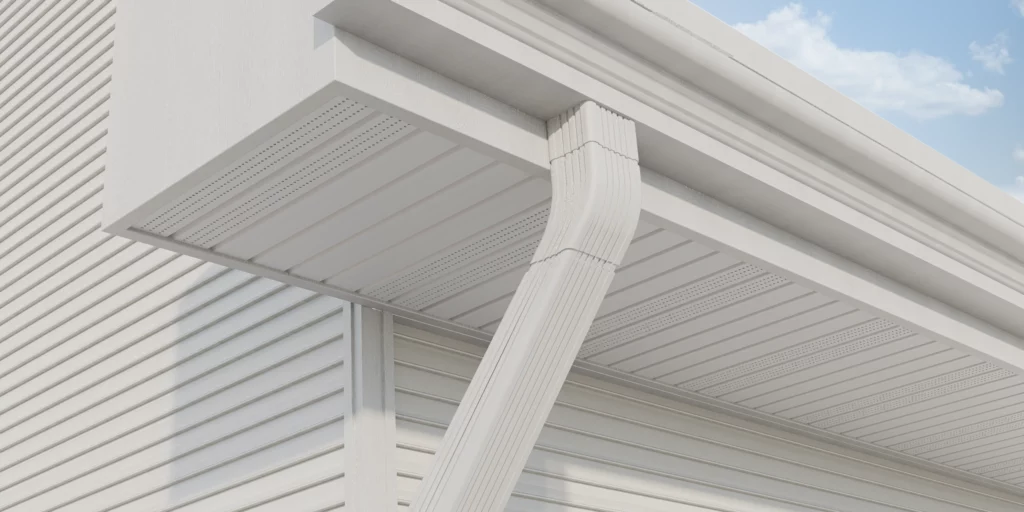
When designing or maintaining a home, roofing elements often get overlooked until problems arise. Two critical but frequently misunderstood components are eaves and soffits. While they are closely related, their functions, structure and impact on your home’s durability differ significantly.
Understanding these differences is essential for homeowners, builders and anyone involved in residential construction or renovation.
Eaves are the edges of the roof that extend beyond the exterior walls of a house.
Soffits are the material that covers the underside of the eaves. They act as a protective and functional layer beneath the roof overhang.
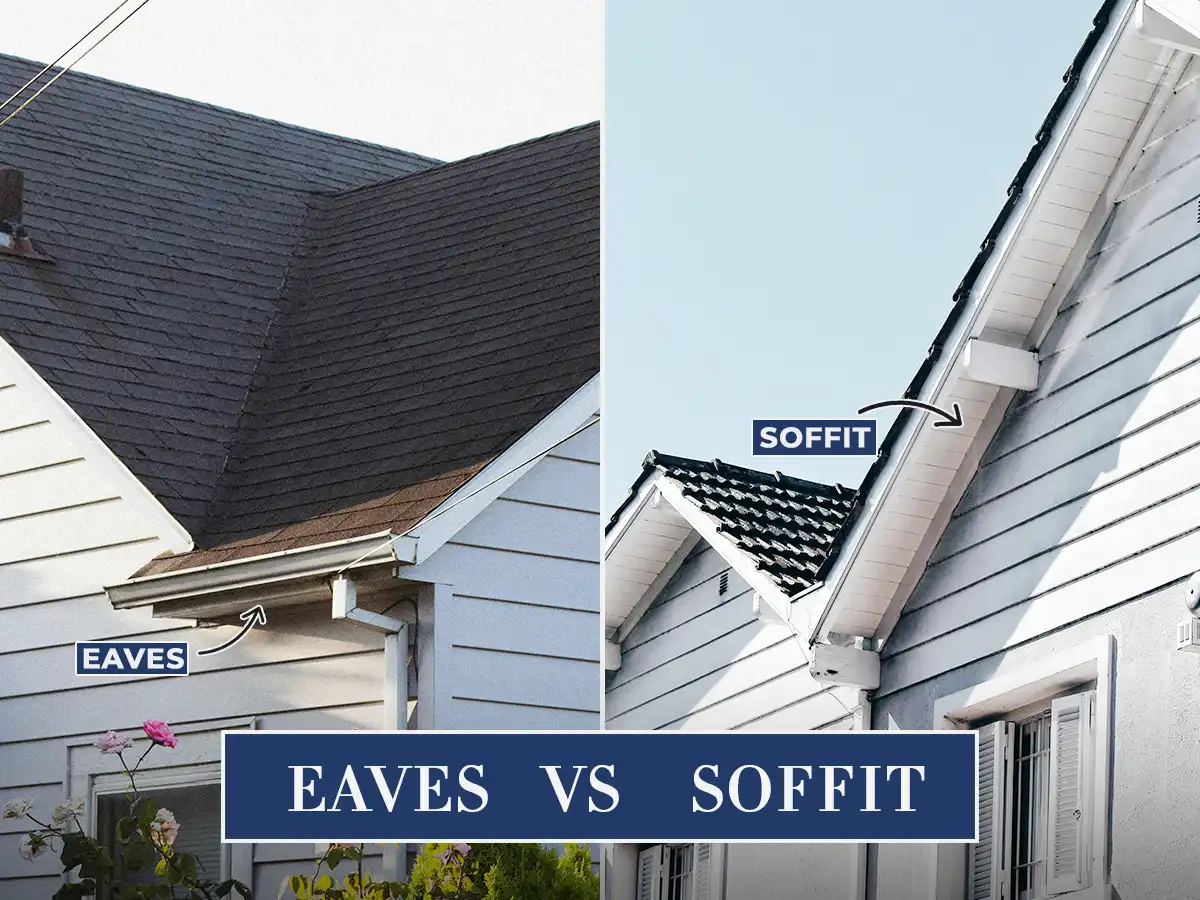
A properly designed roofing system requires both components to work in tandem:
Eaves deflect water away, while soffits ensure proper airflow-together preventing structural decay.
Ventilated soffits help regulate attic temperature, reducing dependency on cooling systems.
Without soffits, moisture can accumulate, leading to mold, rot and insulation damage.
Well-designed eaves and soffits contribute to both curb appeal and functional performance.
For contemporary homes, integrating eaves and soffits is not just functional-it’s strategic.
At Nexa Homes, roofing is approached as a system, not just a structural necessity.
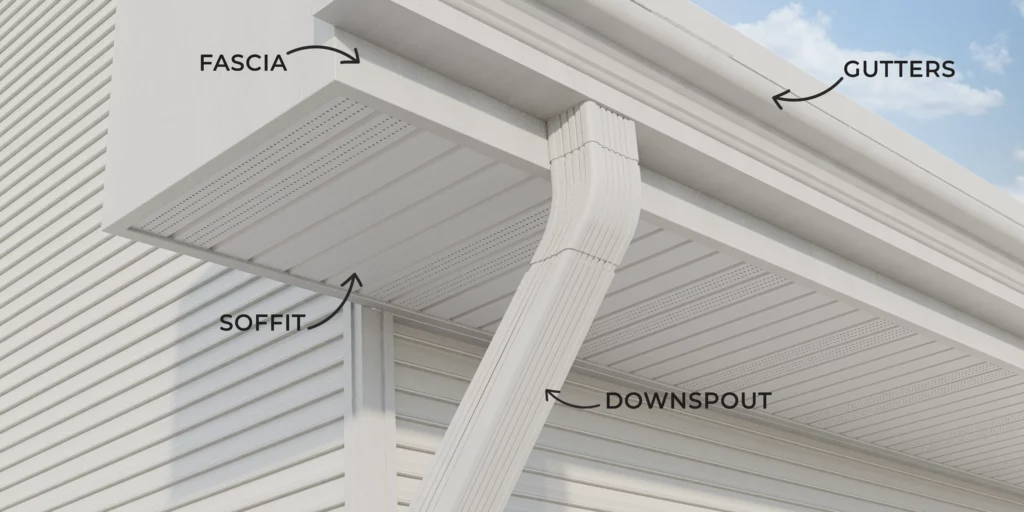
Eaves and soffits are not interchangeable-they are complementary components that ensure your roof performs efficiently and lasts longer. Neglecting either can lead to costly repairs and reduced home lifespan.
A well-planned roofing system integrates both seamlessly, delivering protection, efficiency and visual appeal.
Yes, but it’s not recommended. Without soffits, ventilation and protection are compromised.
Typically every 20–30 years, depending on material and maintenance.
Yes, ventilated soffits improve airflow and reduce heat buildup in the attic.
Planning a new home or upgrading your roof?
Let Nexa Homes design a roofing system that balances durability, efficiency and style.
Contact us today to get started.
Read also -What are Eaves, What is a Gable Roof, Roof Types in Australia,